The Jerome Grand Hotel: Arizona's Most Famous Haunted Stay

On this page
You check in after dark, because that is when the Jerome Grand Hotel looks like what it is. The building stands five stories tall on the side of a mountain, above a copper town that mostly emptied out seventy years ago, and every window glowing up there once belonged to a hospital room. If you have searched whether the Jerome Grand Hotel is haunted, you already know its reputation. What follows is the real history underneath that reputation, and an honest line drawn between what the record proves and what guests swear they felt.
Arizona is thick with reported hauntings, and most of them thin out the moment you ask for a date or a name. This one does not. The Jerome Grand has a documented past a mining company wrote down, a town that died around it, and decades of guest and staff accounts that keep circling the same rooms. We cover all three, then draw the line where the record ends and the legend begins.
Arizona’s Mile-High Hospital
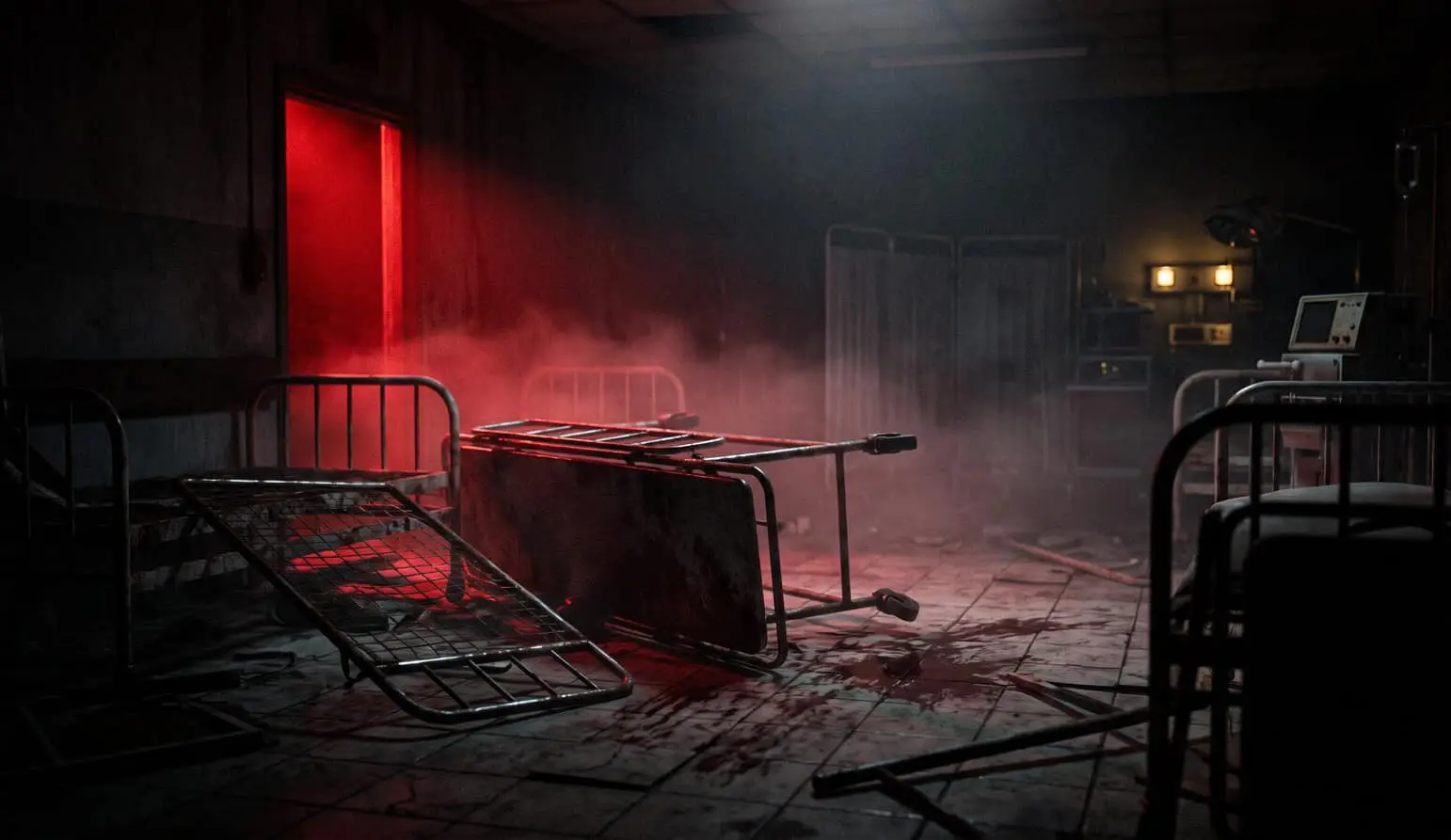
Long before the first guest signed a register, the building was the United Verde Hospital, built in 1926 by the United Verde Copper Company and opened to patients in January 1927. It was the fourth and final hospital raised in Jerome, and it was built to outlast the mines: poured-in-place concrete set on solid bedrock at a steep angle against the mountain, framed without a single piece of wood so it could survive both fire and the dynamite blasts shaking the tunnels below. By 1930 it was recorded as the most modern and well-equipped hospital in Arizona, and possibly in the entire West.
It sits at 5,240 feet, the highest commercial building in the Verde Valley, which is why the hotel still calls itself Arizona’s mile-high landmark. Inside, the original Otis elevator still runs. It was the first self-service elevator in the state, installed in 1926, and it was designed for gurneys, so it crawls at fifty feet a minute. You feel every foot of the climb. That elevator matters later.
The hospital ran until 1950, when the copper operations wound down and the medical staff moved to Cottonwood in the valley below. After that, the building went dark for forty-four years. Larry Altherr bought the shuttered hospital from Phelps Dodge in 1994, and in 1996 it reopened as the Jerome Grand Hotel: the same concrete shell, the same slow elevator, the same long view over a town that had mostly gone.
The Hospital Years and Its Dead
A hospital that serves a mining town for more than two decades collects a great deal of death. Cave-ins, falls, crushing machinery, the 1918 influenza that tore through crowded mining camps, tuberculosis, and the ordinary endings any hospital sees all passed through these rooms. That is documented, and it is the honest foundation under everything guests report today. The building did not invent its dead. It earned its history the hard way.
The hotel’s own history recounts the story told here most often. In 1935, a maintenance man named Claude Harvey was found dead beneath the elevator, and the account holds that the main power switch was off when he was discovered. Whether it was an accident, something worse, or something the decades have embellished, the record of the death is real and the explanation was never settled. It is the seam where the Jerome Grand’s documented past meets its reported hauntings, and it runs right through that slow-moving Otis car.
A Boomtown Gone Quiet
To understand the hotel, look down the hill at the town it watched over. Jerome began with copper claims filed in 1876 and grew into one of the loudest boomtowns in the territory. More than ten thousand people lived here in the 1920s, and in 1903 the New York newspaper The Sun branded it “the wickedest town in the West.” Saloons, brothels, fires, and mining money ran the place.
The hospital on the hill watched the whole arc of it, treating the men who dug the copper that built the town and outliving the industry that paid for both. Then the ore gave out. The mines closed for good in 1953, and the population fell below a hundred within a few years. Jerome became one of Arizona’s best-known ghost towns, a near-empty city clinging to Cleopatra Hill until artists and tourism pulled it partway back. Today fewer than five hundred people live there, and it holds National Historic Landmark status earned in 1967. When you stand at the Jerome Grand after dark, you are looking out over a town that emptied and never fully returned.
What Guests and Staff Report
Now the part the record cannot prove. Since the hotel reopened, guests and staff have described the same handful of experiences often enough that they have become the house’s reputation.
People report coughing and labored breathing in empty hallways, the sound of a hospital that never quite closed. Others describe disembodied voices, footsteps on vacant floors, and the smell of cigarette smoke or something antiseptic drifting through rooms where no one is smoking. Lights flicker and the old boiler-fed heat is said to behave on its own. Some guests report the feeling of being watched in a corridor with no one else in it, or the weight of a hand where no hand should be. A few describe apparitions: a figure at the end of a corridor, a presence at the foot of the bed, a nurse who is not there. Room 32 comes up more than any other, and travelers still book it on purpose, hoping for a haunted hotel room with a story attached.
None of that is evidence the way a hospital ledger is evidence. It is testimony, repeated by enough people across enough years to be worth taking seriously as reputation, if not as proof.
Is the Jerome Grand Hotel Haunted?
So, is the Jerome Grand Hotel haunted? The honest answer has two halves. The documented half is not in question: this was a hospital where people died for more than twenty years, in a town that became a graveyard of industry, and both of those facts are written down. The reported half, the voices and the apparitions and the story under the elevator, lives in guest accounts rather than in the record. We keep those two halves apart on purpose, because a haunted history lands harder when you can tell which parts are true.
Where the Fear Is Built on Purpose
Reading about a haunted stay is its own kind of thrill. You book the room, you lie awake listening to a century-old building settle, and you decide for yourself whether the cold spot means anything. If that historic route is what you want, there are other haunted hotels across the state built on the same kind of real history.
A night at the Jerome Grand asks you to wait in the dark and hope something happens. A haunt is built so that it does. At Scarizona Scaregrounds, the fear is designed, staffed, and lit like a production: three haunts on one price, an award-winning in-character cast, and single-artist special-effects makeup working an immersive post-apocalyptic set minutes from Phoenix in Mesa. The 2024 Highest Rated Cast Award for the Southwest, from The Scare Factor, sits on a professional 8.35 out of 10 review with a 9.0 cast score. Jerome hands you a haunted history and lets you imagine the rest. Scarizona hands you the scare directly.
See a Built Scare for Yourself
Arizona’s fear comes in two forms. There is the kind you read about and drive north to sleep inside, and there is the kind built to find you in the dark. The Jerome Grand Hotel is a genuine example of the first, a real building with a real past and a reputation earned over a century, and it is one of the darkest entries in our Haunted Arizona files.
For the second, the drive is a lot shorter. When you want a scare engineered to land, come walk all three haunts at Scarizona in Mesa, and find out what fear feels like when someone builds it on purpose.
Frequently Asked Questions
Is the Jerome Grand Hotel haunted?
The hotel carries a documented history as a mining-town hospital where people died for more than two decades, and it has a long-standing reputation as one of Arizona's most reported haunted stays. The hauntings themselves live in guest and staff accounts rather than in any record, so the honest answer separates the proven history from the reported legend.
What was the Jerome Grand Hotel before it was a hotel?
It was the United Verde Hospital, built in 1926 by the United Verde Copper Company and opened to patients in January 1927. The building served the mining town until 1950, then stood empty for forty-four years before reopening as the Jerome Grand Hotel in 1996.
Why is Jerome, Arizona called a ghost town?
Jerome was a copper boomtown of more than ten thousand people in the 1920s. When the mines closed for good in 1953, the population fell below a hundred within a few years, leaving a near-empty city on the mountainside. Tourism and artists later revived part of it, and it earned National Historic Landmark status in 1967.
Where can I get a real scare near Phoenix?
Scarizona Scaregrounds in Mesa runs three walk-through haunts on one price with an award-winning cast and single-artist special-effects makeup, minutes from Phoenix. It is a designed, staffed production rather than a historic building you hope feels haunted after dark.
Keep Reading
Related Articles
Scary Places in Arizona: Where the Real Fear Lives
Scary places in Arizona, sorted honestly: real haunted mining towns, homegrown cryptid legends, and the one Halloween haunt built on purpose in Mesa, Arizona.
The Mogollon Monster: Arizona's Bigfoot-Like Cryptid
The Mogollon Monster legend, Arizona's Bigfoot: what the story says it looks like, where sightings are set along the Mogollon Rim, and how it gets told.
Arizona Urban Legends & Creepypasta: The Stories Locals Whisper About
Arizona's real urban legends and the internet-born creepypasta that borrows its deserts: La Llorona, skinwalker lore, the Phoenix Lights, told straight.