
On this page
In July, the lot off Alma School Road is gravel and heat. By October, it is a world you can be hunted through. Between those two states sits a build most guests never picture: a haunt raised from the ground up like a film set, then rigged to scare.
How do haunted houses work? Not by accident. A serious haunt is engineered long before opening night, through concept, construction, lighting, sound, pacing, and a cast trained to hold a scare for hours. What follows is how that build runs, section by section, and how Scarizona Scaregrounds turns an empty desert lot into Arizona’s Favorite Place of Fear.
It Starts on Paper
Before a wall goes up, the haunt exists as a story. Designers pick a world and commit to it, the way a film locks a production design before the first set gets built. Theme is the spine of the whole show. A haunt with a coherent world reads as a place you have stumbled into. A random string of scares reads as a hallway with actors in it.
That commitment is why Scarizona builds an immersive post-apocalyptic set instead of a generic corridor of jump scares. Each of the three walk-through haunts carries its own logic. Mayhem in Madness is chaos and clowns. Startled Darkness is confinement and near-total black. Dr. Death ICU is medical horror gone wrong. The theme decides everything downstream: the materials, the color of the light, the sound in the walls, and the kind of monster waiting in each room.
Theming also gives the fear a reason to exist. A guest who understands, even loosely, what kind of world they have entered starts filling in the story on their own, and a story is far more frightening than a series of disconnected shocks. The design leans on that. Once you accept the premise of a ruined world or a hospital that has turned on its patients, every prop and every sound confirms it, and your imagination does half the work of scaring you before an actor ever moves.
Building the World
Concept becomes a physical place at the construction stage. Crews frame corridors, hang facades, and dress every surface until the set holds up from a few feet away. This is the part that separates a real haunt from a garage attraction. A guest passes within arm’s reach of the walls, so the build has to survive close inspection, constant traffic, and, in Arizona, an outdoor season of heat and wind.
Good haunted attraction construction leans on a few working tricks. Forced perspective stretches a small space into a long, dread-heavy hallway. Tight turns and low ceilings shrink the world around you and take away your sense of where the exit is. Dead ends and false doors keep you from mapping the route, so you never quite know what is coming. Every corner is placed to control what you see and, more to the point, what you cannot.
Dressing is what sells the world once the framing is up. Crews weather fresh lumber so it looks decades old, rig practical props that a guest can nearly touch, and layer grime, rust, and debris until a brand-new build reads as a place that has been rotting for years. Because Scarizona runs outdoors on a gravel lot, that dressing also has to stand up to desert wind and the wear of thousands of guests moving through it night after night, so durability is designed into the scenery from the start. How that lot became one shared world is the subject of our look at the post-apocalyptic set.
The set is also where the value of the model shows up. One price walks you through all three haunts, each built as a separate world with its own dressing, its own palette, and its own scares. Three distinct builds on one lot is a far bigger construction job than a single house, and it is the reason the night feels like moving between films rather than repeating a loop.
Painting With Light and Sound
A set only becomes frightening once the lights go down. Lighting design in a haunt works backward from how a camera would light a scene. Instead of showing you the room, it hides most of it, then throws a colored wash across what remains so your eyes never settle. Deep shadow gives a monster somewhere to stand three feet away while staying invisible until it moves. Color does the rest, since red and green light strip the warmth out of a face and turn a person into a threat.
Sound is the other half of the trap. Layered sound design fills the walls with low drones, distant screams, and mechanical noise, so your nerves are frayed before anything jumps. The audio also masks the cast. When the whole room is humming, you cannot hear the actor step in behind you. The extreme version of light control is Blackout Night, the season-end encore that removes the light almost entirely and hands each group a single glowstick as their only way to see.
The Architecture of Fear
Set, light, and sound are the tools. Fear design is how they get sequenced. A haunt built by people who understand the craft treats a scare like a beat in a script, and the space between beats matters as much as the beats themselves.
The engine underneath it is your own biology. When a threat registers, your brain runs a fast fear response before your conscious mind catches up, flooding the body and spiking the heart rate. A haunt is designed to trigger that response on purpose, then give you the safety to enjoy the rush on the far side of it. That is why a good scare feels thrilling instead of traumatic.
Pacing is what makes it land. The design builds anticipation in a dark, quiet stretch, holds you there long enough to imagine the worst, then breaks the tension with a jump scare or a slow reveal you never saw forming. Then it lets you breathe before winding you up again. A haunt that scares nonstop numbs you within minutes. A haunt that understands the rhythm keeps resetting your guard so every scare hits fresh. Control of that timing, far more than the volume of blood, is what makes a haunted house actually scary.
Misdirection carries a lot of that weight. The design pulls your attention to one side of the room with a loud effect or a moving prop while the real scare waits on the other, so the moment you clock the threat, it already has you. Sightlines are engineered the same way, opening far enough to promise a payoff and then hiding where and when it arrives. The best rooms trade on the fear of what might be there as much as what is, because a threat you cannot fully see is one your own mind keeps building.
The People Inside It
No set scares on its own. The moment a room becomes dangerous is the moment a live performer commits to it. A serious haunt runs a real in-character cast, trained to hold a role for hours and to read each group in the half-second before they trigger a scare. The craft of the cast is deep enough to be its own discipline, and it is why the best haunts recruit and train their scare actors like a production hires performers.
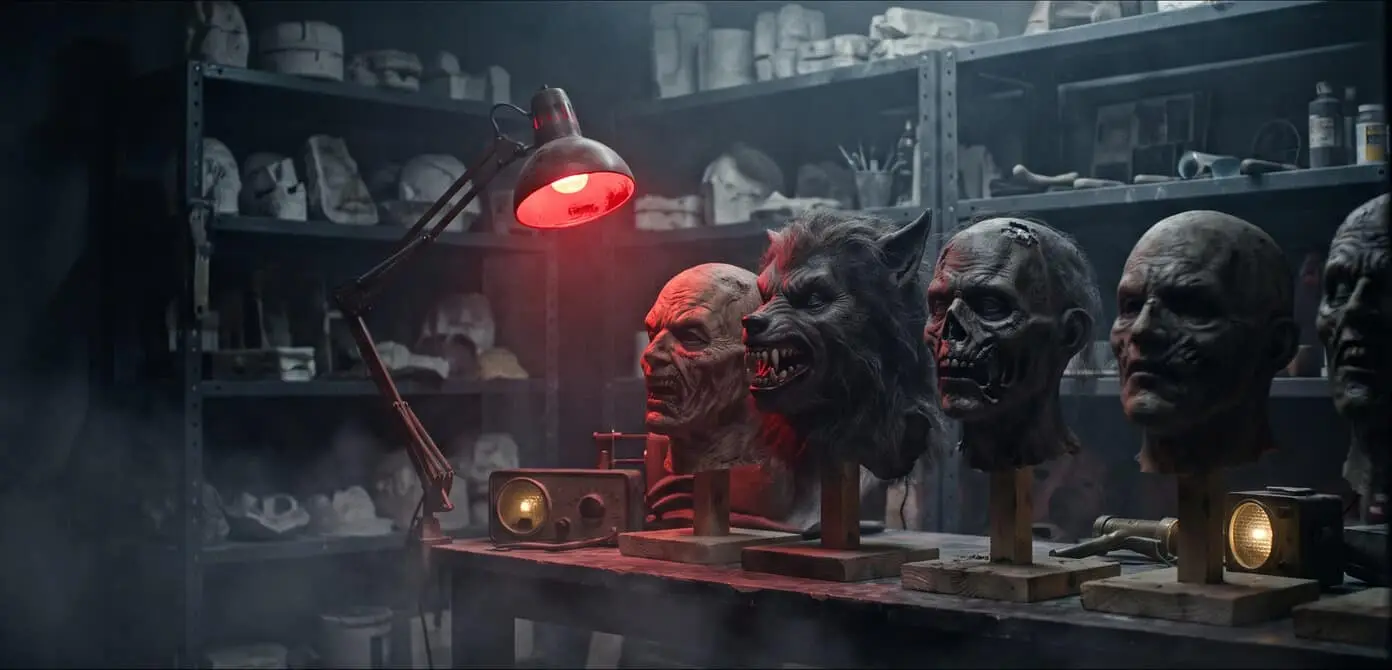
The cast has to look the part up close, which is where the makeup table comes in. Scarizona runs a single-artist approach to special effects makeup, so one hand sets the look of every monster and the whole show speaks one visual language. Latex and airbrush build injury and rot in three dimensions, engineered to read under low, colored light and to survive a full night of motion and sweat. A monster you meet in the dark has been designed, sculpted, and painted long before it steps into your path.
Tearing It Down, Building It Back
The part that surprises people most is that the world does not stay up. A production-grade haunt is temporary by design. The set goes up for the season, works every night through the run, then comes down. Nothing about the timeline is casual, because outdoor sets take a beating and a returning guest expects something new.
Scarizona redesigns and rebuilds its world each October rather than reopening last year’s rooms. That cycle is a real engineering problem: strike the old build, design the changes, raise the sets, rig the light and sound, dress every corner, and train the cast, all timed to hit the opening nights when the gates open at 7. The reward for that work is a haunt that never feels like a rerun. The show a guest walks on the first night of the season is the show the last guest of the season gets, held to the same standard the whole way through.
Craft You Walk Through
All of this is cheap to claim and hard to prove. Scarizona’s proof is external. In 2024 the cast took the “Highest Rated Cast” Award for the Southwest from The Scare Factor, scoring 9.0 out of 10 for the cast inside a professional 8.35 review. That result comes from a real production discipline: a designed world, engineered light and sound, a fear sequence built on purpose, and a hand-crafted cast, run by a family-owned Arizona haunt that has been building scares for over two decades.
Come See It Standing
A haunted house is a production long before anyone screams. Concept and theme, a physical set dressed to survive close inspection, light and sound tuned for the dark, a fear sequence built beat by beat, and a cast crafted to hold it all together. That is the whole point of Behind the Screams: the show works because the craft under it is treated like a production.
Reading how a haunt is made is one thing. Standing inside a finished one is another. When you are ready to walk the build for yourself, come see all three haunts and find out how close the craft gets.
Frequently Asked Questions
How do haunted houses work?
A haunt routes you on a fixed path through built sets, timed so scares land when your guard drops. Lighting hides the room, sound sets the nerves, and a live cast triggers each moment as you pass. Timed-entry admission paces the crowd so the show stays tight.
How long does it take to build a haunted house?
It varies with the scale of the show. A serious outdoor haunt runs on a seasonal cycle, with design starting well ahead of the crew raising sets, dressing rooms, and rigging light and sound. Scarizona redesigns and rebuilds its world every October rather than reopening the same one.
What makes a haunted house scary?
Timing and control. A strong haunt builds dread in the dark, holds you in it, then breaks it with a scare you did not see forming. The set, the light, the sound, and the cast all work to steer where you look and when your nerves spike, so the fear feels earned instead of random.
Can you see how the haunt is built at Scarizona?
You walk the finished build. The three haunts, the lighting, and the dressed sets are the craft in use, and the roaming characters on the midway are the closest look at the cast and their makeup. Cameras stay off inside the attractions, so the experience is meant to be lived in person.
Keep Reading
Related Articles
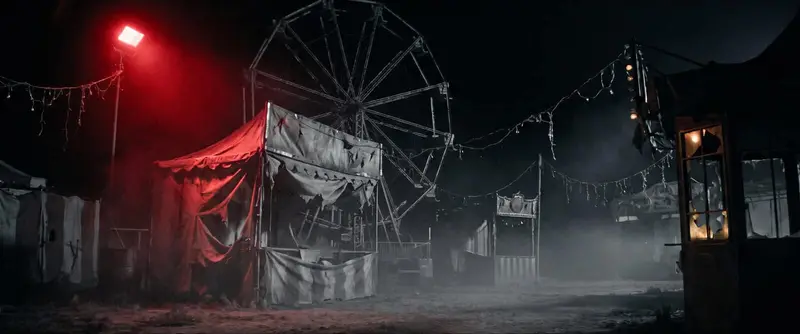
Designing a Post-Apocalyptic World: Inside Scarizona's Gravel-Lot Set
Scarizona's post-apocalyptic haunted house sits on an open-air gravel lot in Mesa: the design logic behind the sightlines, the midway, and the ground underfoot.
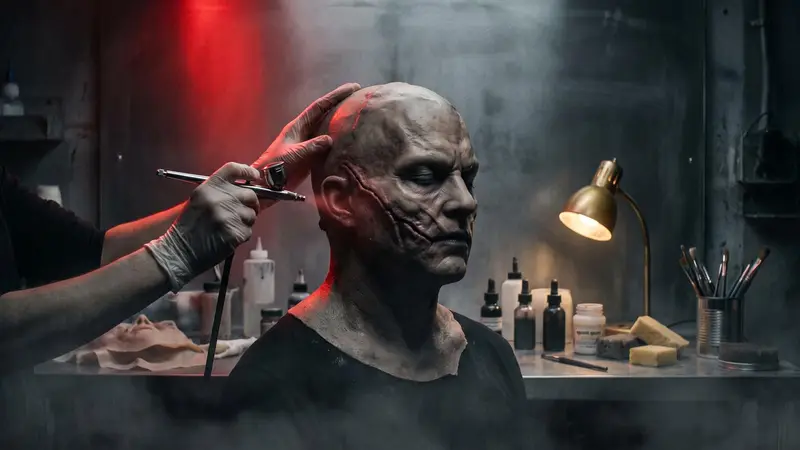
Arizona's Highest-Rated Cast: Inside Scarizona's Award-Winning Scare Actors
Scarizona's cast won the 2024 Highest Rated Cast Award from The Scare Factor. Here's what the score actually measures, and who earns it every October.
What It's Actually Like to Work at a Haunted House
What is it like to work at a haunted house? Inside our makeup chair, a full night on the set, staying in character, and why our cast comes back each fall.