How Special Effects Makeup Brings a Haunt's Monsters to Life
On this page
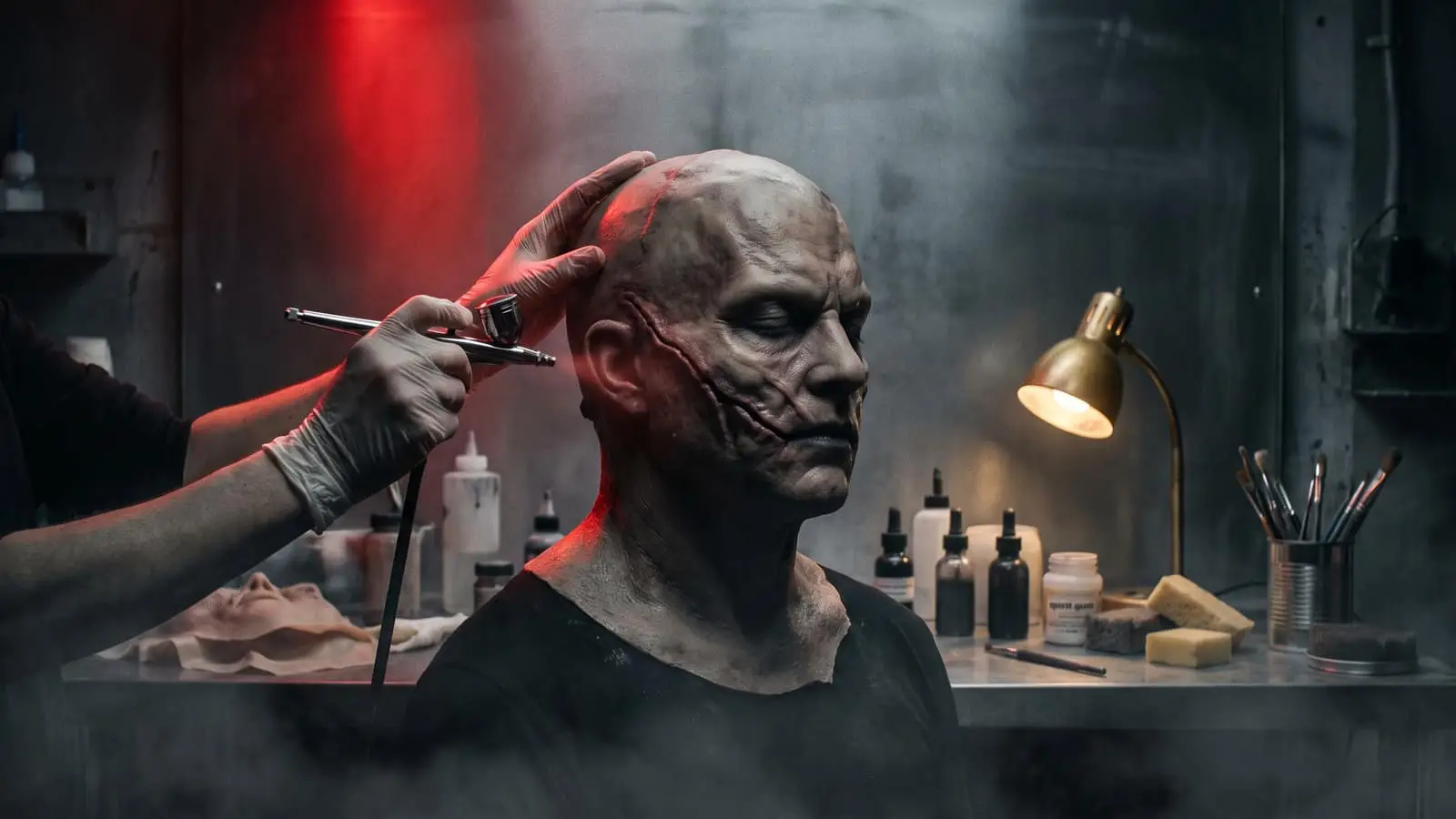
An hour ago, the face in the makeup chair belonged to a college student from Mesa. Now it belongs to something that will hunt you through the dark. Between the two sits special effects makeup, the craft that turns a person into a monster one layer at a time.
Every scare you meet at a serious haunt starts here, at the makeup table. What follows is how that craft works, the latex and airbrush behind it, and the part no tutorial shows you: building a monster that has to hold up in the dark, night after night. It is also how Scarizona Scaregrounds builds the cast that earns its scares.
What Special Effects Makeup Actually Is
Special effects makeup, or SFX, is the craft of building injury and anatomy onto skin instead of only adding color. It has shaped horror since the first monster films, and the tools have grown sharper ever since. Underneath every good haunt face are a few core materials.
More Than Paint
Beauty makeup adds color to a face. Special effects makeup adds a third dimension. A piece of prosthetic makeup can sink an eye socket, split a lip, or raise a burn that catches shadow when the actor turns. That physical depth is why a strong monster reads as real and a weak one reads as a costume. The face is sculpted first, then painted.
The Horror Toolkit: Latex, Silicone, and Airbrush
The workhorses are latex and silicone. Liquid and foam latex build texture straight on the skin or as pre-made appliances, and silicone pieces flex like real flesh for close detail. Both hand the artist a shape to work with before a drop of color goes down, and our deeper guide to the haunt build covers how each material gets chosen.
Airbrush is the other half. A fine spray lays color in thin, even passes, so an artist can build bruising, rot, and grime in seconds instead of stippling every inch by hand. Across a cast of dozens, that speed is the difference between opening on time and holding the line at the gate.
Foam latex and silicone each earn their place. Foam latex is light and affordable, which makes it the practical pick when a whole cast needs appliances every night. Silicone costs more and takes more skill to run, but it moves like skin and reads flawlessly up close, so it goes where a guest gets nearest to the monster. The choice is less about art than about how many faces have to open the show.
How One Artist Builds Every Monster
Film sets run large makeup departments for a handful of hero actors. A haunt flips that math. One horror makeup artist can carry the look of an entire cast, so the process has to be fast, repeatable, and consistent across every face in the show.
One Artist, Every Monster
When the same hand builds every monster, the whole show speaks one visual language. That is the point of single-artist SFX: one lead sets the palette, the wound style, and the level of realism, then applies it across dozens of characters. Nothing looks borrowed from a different show. A guest moving from one attraction to the next stays inside a single world with one hand behind every face in it.
It is also a logistics answer. With one artist setting the standard, the same character looks right whether it is the first night of October or the last, and new cast members get folded into an established look instead of improvising their own.
From Blank Face to Final Character
The build runs in a fixed order. It starts with the character on paper, moves to the prosthetic or appliance, then the airbrush passes, then the fine details that sell it up close. Because every scare here is built with practical effects, standing in the room with you, the makeup has to survive being seen from a few feet away.
The theme drives the choices. A surgeon gone wrong in Dr. Death ICU needs believable blood, sallow skin, and clinical grime, so the artist leans on wet-look color and careful shading. A decayed figure needs its texture and rot built up in latex first, then painted.
Blood is its own discipline. A fresh cut, a day-old bruise, and a week-old wound are three different colors, and getting them wrong turns a scare into a joke. The artist layers dark bases under bright reds, seals the edge of every appliance so no seam shows, and keeps the wet look wet where it counts. That detail is what a guest still pictures the next morning.
A chaotic maze like Mayhem in Madness asks for bolder, faster-reading faces, because guests catch each monster for only a heartbeat before it moves. Every design answers one question: what will this face do to someone three feet away in the dark?
Makeup Built for the Dark
This is the part no tutorial covers. A haunt look is built for one set of conditions: a few feet of distance, low and colored light, and an actor who moves for hours on outdoor terrain. Those constraints change every decision at the table.
Reading in Low and Colored Light
Under dim, gelled light, subtle makeup vanishes. So haunt faces use stronger contrast and deeper sculpted shadow than a camera would ever ask for, and colors get chosen for how they hold up under red and green wash. The far end of this is Blackout Night, where the lights go out and a single glowstick is all a guest carries. A face designed for that has to land in almost no light at all.
Surviving Motion, Sweat, and a Full Night
Then the work has to last. An actor scares for hours on outdoor terrain, so adhesives and sealers matter as much as artistry. Layered airbrush shading earns its keep here too, since thin passes ride out sweat and motion better than heavy hand-painting. And every look has to go back on the next night, and the night after that, without losing its edge.
Taking the makeup off matters as much as putting it on. Prosthetic adhesives grip hard, so the cast removes appliances slowly and cares for the skin underneath, because the same actors are back in the chair tomorrow. Consistency is the quiet goal behind all of it. The monster you meet on opening weekend should be the monster the last guest of the season meets, too.
Craft You Can See Onstage
All of this is cheap to claim and hard to prove. Scarizona’s proof is external. The cast took the 2024 Highest Rated Cast Award for the Southwest from The Scare Factor, with a cast score of 9.0 out of 10 inside a professional 8.35 review. The reviewers called the haunt home to “an abundance of fantastic, dedicated ghouls and creeps.”
That result comes from a real in-character cast, hand-built by a single artist, working an immersive post-apocalyptic set after dark. For the story of the people wearing the work, our piece on the award-winning cast picks it up from there.
See the Monsters for Yourself
A haunt scare is built by hand long before anyone wears it. Sculpted in latex, sprayed in airbrush, engineered to hold its edge in the dark, one monster at a time. The whole approach is the point of Behind the Screams: the show works because the craft behind it is treated like a production.
Reading about a monster is one thing. Walking within arm’s reach of one is another. When you are ready to meet the faces behind the mask, come see all three haunts and find out how close the craft gets.
Frequently Asked Questions
What is special effects makeup made of?
Special effects makeup uses liquid and foam latex, silicone appliances, spirit gum and other adhesives, and airbrushed color. The prosthetic pieces build shape on the skin, and the paint layers add the depth, bruising, and grime that sell a monster up close.
How long does horror SFX makeup take to apply?
It depends on the character. A simple painted look can take a few minutes, while a full prosthetic monster with appliances and airbrush work can run well over an hour. A haunt cast builds that time into its nightly call, every night the show runs.
What is the difference between a latex prosthetic and airbrush makeup?
A latex or silicone prosthetic is a sculpted piece that adds three-dimensional shape, like a torn cheek or a swollen brow. Airbrush makeup is sprayed color that blends the piece into the skin and builds shadow. Most monsters use both together.
Can you see the special effects makeup up close at Scarizona?
Yes. The roaming characters on the midway are the only photo ops, so that is where you get the closest look and a picture. Cameras stay off inside the attractions, but you pass within a few feet of the cast the whole way through.
Keep Reading
Related Articles
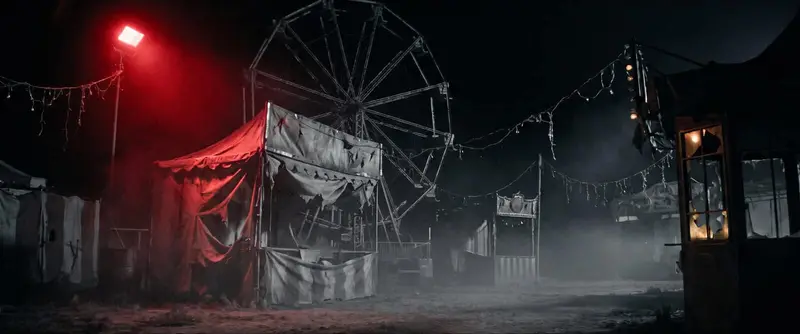
Designing a Post-Apocalyptic World: Inside Scarizona's Gravel-Lot Set
Scarizona's post-apocalyptic haunted house sits on an open-air gravel lot in Mesa: the design logic behind the sightlines, the midway, and the ground underfoot.
Arizona's Highest-Rated Cast: Inside Scarizona's Award-Winning Scare Actors
Scarizona's cast won the 2024 Highest Rated Cast Award from The Scare Factor. Here's what the score actually measures, and who earns it every October.
What It's Actually Like to Work at a Haunted House
What is it like to work at a haunted house? Inside our makeup chair, a full night on the set, staying in character, and why our cast comes back each fall.