One Artist, Every Monster: Inside Scarizona's Single-Artist SFX Process
On this page
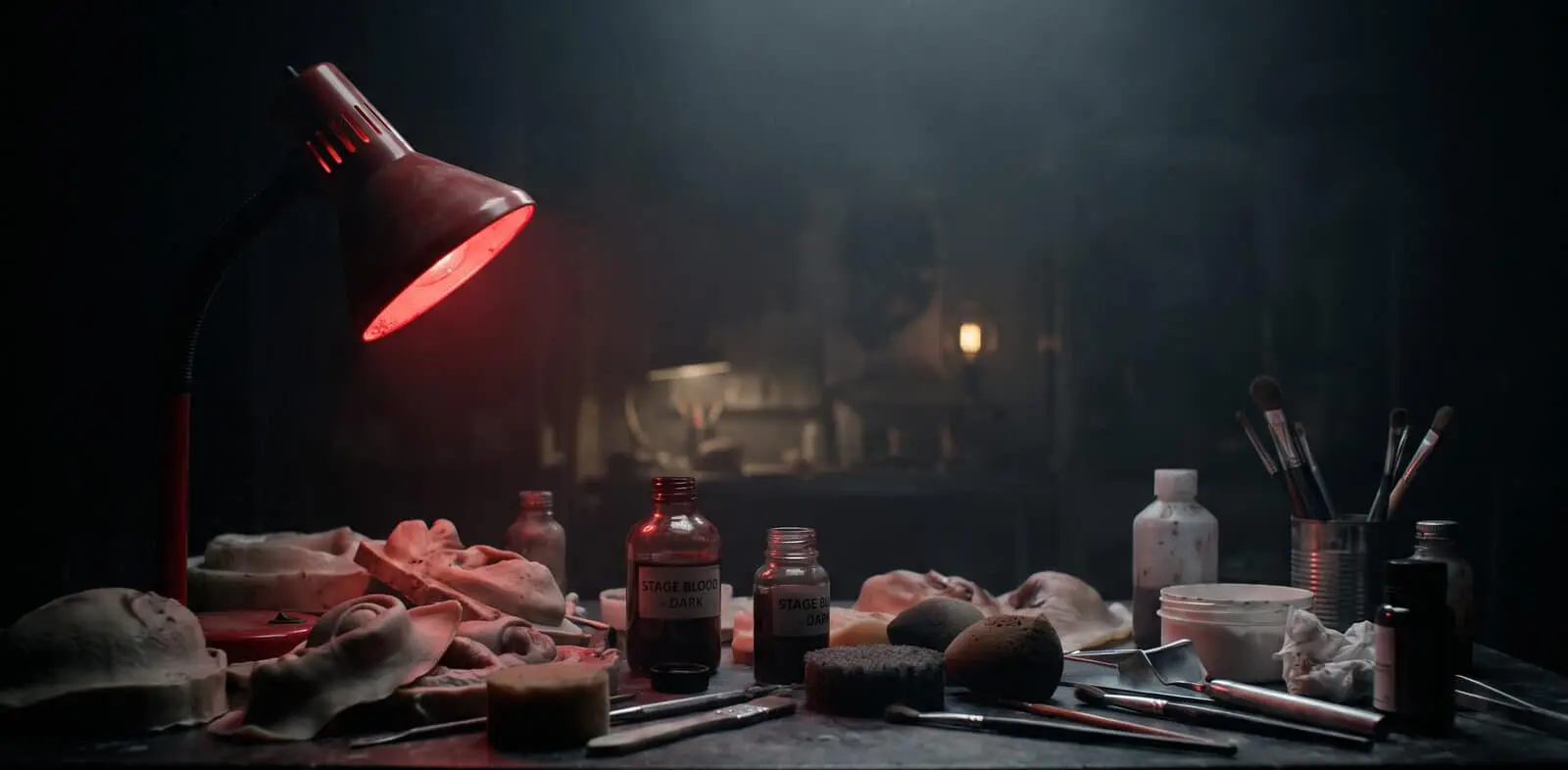
Most haunted attractions hire the look of their monsters out. A face here, a wound there, a rotating crew of freelance makeup artists who each bring a different hand to the chair. Scarizona works the other way. One artist designs and builds every creature in the show, across all three haunts, so the cast you meet in the dark shares a single vision from the first mask to the last.
That choice is the quiet reason the monsters hold together. It is also the story behind Scarizona Scaregrounds, a family-owned Mesa haunt built and staffed like a production rather than assembled from parts.
One Artist, Every Haunt
A film set runs a large makeup department for a small number of hero actors. A haunt reverses the arithmetic. Dozens of monsters walk every night, and at Scarizona a single solo SFX artist carries the look of all of them. That is uncommon even inside the haunted house industry, where many attractions split the work among a rotating pool of volunteers and part-time freelancers.
When one hand builds every monster, the whole show speaks one visual language. The artist sets the palette, the wound style, and the level of realism once, then applies it to every character across Mayhem in Madness, Startled Darkness, and Dr. Death ICU. A guest walking from one haunt into the next never crosses a seam between two artists’ tastes. The world stays whole.
Divide that job across five freelancers and you get five styles. One artist’s blood runs orange, another’s runs brown, a third sculpts deeper than the rest. Each difference is small on its own and obvious in a lineup. A single artist erases them by default, which is why the cast reads as one coherent nightmare instead of a costume contest.
The three haunts make that coherence harder to pull off, and more valuable when it lands. Mayhem in Madness runs on chaos and clowns. Startled Darkness trades on confinement and near-total black. Dr. Death ICU is medical horror turned against its own patients. Three worlds that look nothing alike still carry the same hand underneath: the same restraint with blood, the same internal logic to a wound, the same refusal to let a face read as a store-bought mask. One artist is how a guest feels the jump between three separate worlds without ever feeling handed off to a different show.
Solved in the Off-Season
October is when guests see the work. The work itself starts months earlier. A production-grade haunt runs on a seasonal cycle, and the makeup design is part of the build, not an afterthought bolted on the week before opening.
In the quiet months the artist designs characters on paper first, deciding what each monster is and what it has been through. From there the plan moves to sculpting and casting appliances, mixing the palette, and testing how a face reads before a guest is ever standing three feet from it. By the time the gates open at 7 on the first night of the season, the look of the entire cast has already been solved.
That lead time is what lets one person cover a full cast. Appliances are made ahead of the run. New cast members are folded into a look that already exists instead of inventing their own. And because Scarizona redesigns and rebuilds its world each October, the artist is not repeating last year’s monsters. Every season brings new characters built inside the same coherent style, so a returning guest gets something new that still feels unmistakably like the same haunt.
The Materials: Latex, Silicone, and Airbrush
Every monster is built from a short list of workhorse materials, each chosen for what it does under haunt conditions.
Latex comes first. Liquid and foam latex build texture straight onto the skin or as pre-made appliances, handing the artist a shape to work with before any color goes down. Foam latex is light and affordable, which matters a great deal when a whole cast needs pieces every night the show runs.
Silicone earns its place where a guest gets closest. It flexes like real flesh and holds up flawlessly at arm’s length, so it goes on the characters people pass nearest to. It costs more and takes more skill to run, so the artist spends it where it counts and leans on latex everywhere else.
Airbrush is the color. A fine spray lays bruising, rot, and grime in thin, even passes, building depth in seconds instead of stippling every inch by hand. Across a cast this size, that speed is the difference between opening on time and holding the crowd at the gate. For a fuller walk through the toolkit, our piece on special effects makeup covers how each material gets picked for each face.
Faces Built for the Dark
A haunt look answers a set of conditions no film shoot deals with. The monster is seen from a few feet away, under low and colored light, worn by an actor who moves for hours on outdoor gravel. Every decision at the table bends to that.
Subtle makeup disappears in the dark, so haunt faces use stronger contrast and deeper sculpted shadow than a camera would ever ask for. Colors get chosen for how they hold up under red and green wash, since gelled light strips the warmth out of a face and can flatten a careful paint job into mud. A design that looks overdone in daylight is the design that reads when the light drops to almost nothing, and inside a Scarizona haunt the light is always dropping.
Then the work has to last. An actor scares for hours in the Arizona heat, so adhesives and sealers matter as much as artistry. The makeup has to survive sweat and motion, come off at the end of the night without tearing the skin underneath, and go back on the next night, and the night after that, through the whole run. The monster the first guest of the season meets should be the monster the last guest of the season meets, held to the same standard the whole way through.
Why One Hand Keeps It Consistent
Consistency is the whole payoff of the single-artist approach. A haunt lives or dies on whether the illusion holds, and a broken monster breaks it faster than a slow scene ever could. When one artist owns every face, the standard does not drift between characters, between attractions, or between the first weekend and the last night of the season.
That discipline shows up in the scores. In 2024 The Scare Factor named Scarizona’s cast the Highest Rated Cast in the Southwest, with a 9.0 out of 10 cast score inside a professional 8.35 review, and called the haunt home to “an abundance of fantastic, dedicated ghouls and creeps.” Awards go to the cast, but a cast is only as convincing as the faces its performers wear. You can read more about the people who build and run the show on our team page.
Come Meet the Monsters
Reading about a monster is one thing. Standing an arm’s length from one, in the dark, is another. The roaming characters on the midway are the only place cameras are allowed, so that is where you get the closest look at the craft and a photo to prove it. Everywhere else, the monsters come to you.
When you want to see what one artist can build across three haunts, get your tickets and walk the show for yourself.
Frequently Asked Questions
What is a solo SFX artist at a haunted house?
It is a single special-effects makeup artist who designs and builds the look of an entire cast, instead of dividing the work across a rotating pool of freelancers. At Scarizona, one artist sets the palette, the wound style, and the level of realism, then applies it to every monster in all three haunts.
Does one artist really do all the makeup for a haunt?
Yes. It works because most of the design is finished in the off-season, when appliances get sculpted and cast ahead of opening night. That lead time lets one hand carry a full nightly call, and new cast members get folded into an established look rather than improvising their own.
What materials does haunt SFX makeup use?
Liquid and foam latex, silicone appliances, adhesives and sealers, and airbrushed color. Latex and silicone build the shape on the skin, and airbrush lays the bruising, rot, and grime that sell a monster up close and hold up under low light.
Can you see the SFX makeup up close at Scarizona?
Yes. The roaming characters on the midway are the only place cameras are allowed, so that is where you get the closest look and a photo. Inside the attractions the cameras stay off, but you pass within a few feet of the monsters the whole way through.
Keep Reading
Related Articles
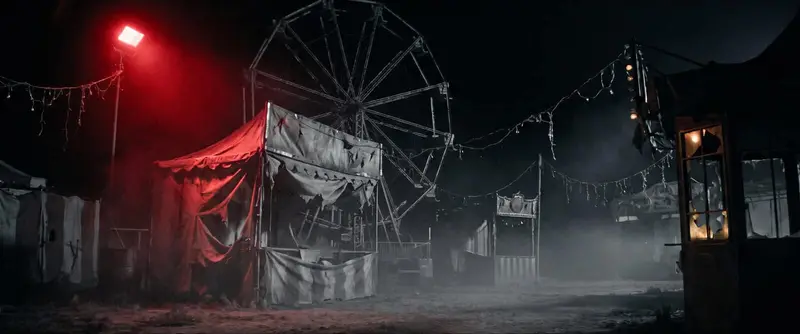
Designing a Post-Apocalyptic World: Inside Scarizona's Gravel-Lot Set
Scarizona's post-apocalyptic haunted house sits on an open-air gravel lot in Mesa: the design logic behind the sightlines, the midway, and the ground underfoot.
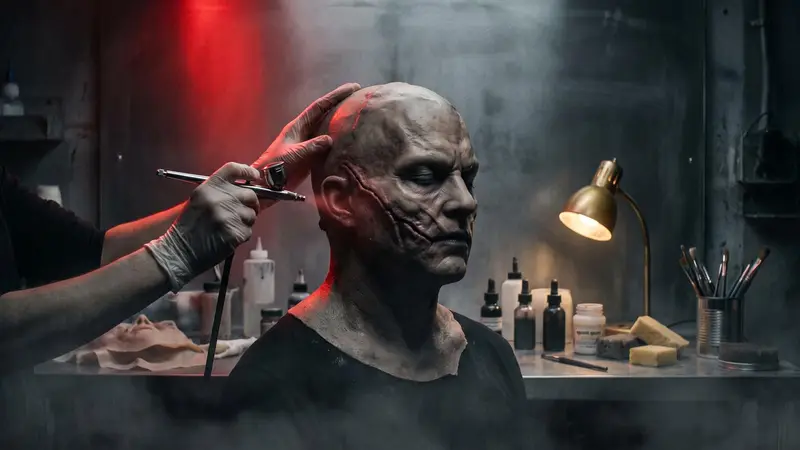
Arizona's Highest-Rated Cast: Inside Scarizona's Award-Winning Scare Actors
Scarizona's cast won the 2024 Highest Rated Cast Award from The Scare Factor. Here's what the score actually measures, and who earns it every October.
What It's Actually Like to Work at a Haunted House
What is it like to work at a haunted house? Inside our makeup chair, a full night on the set, staying in character, and why our cast comes back each fall.