On this page
We get asked some version of this question every season, usually by a guest still catching their breath at the exit: what is it actually like back there? Not the résumé version, the real one. What does a night look like from the other side of the fog? Here is the honest answer, from the makeup chair before the gate opens to the drive home after the last car pulls out.
Before the Gate: The Makeup Chair
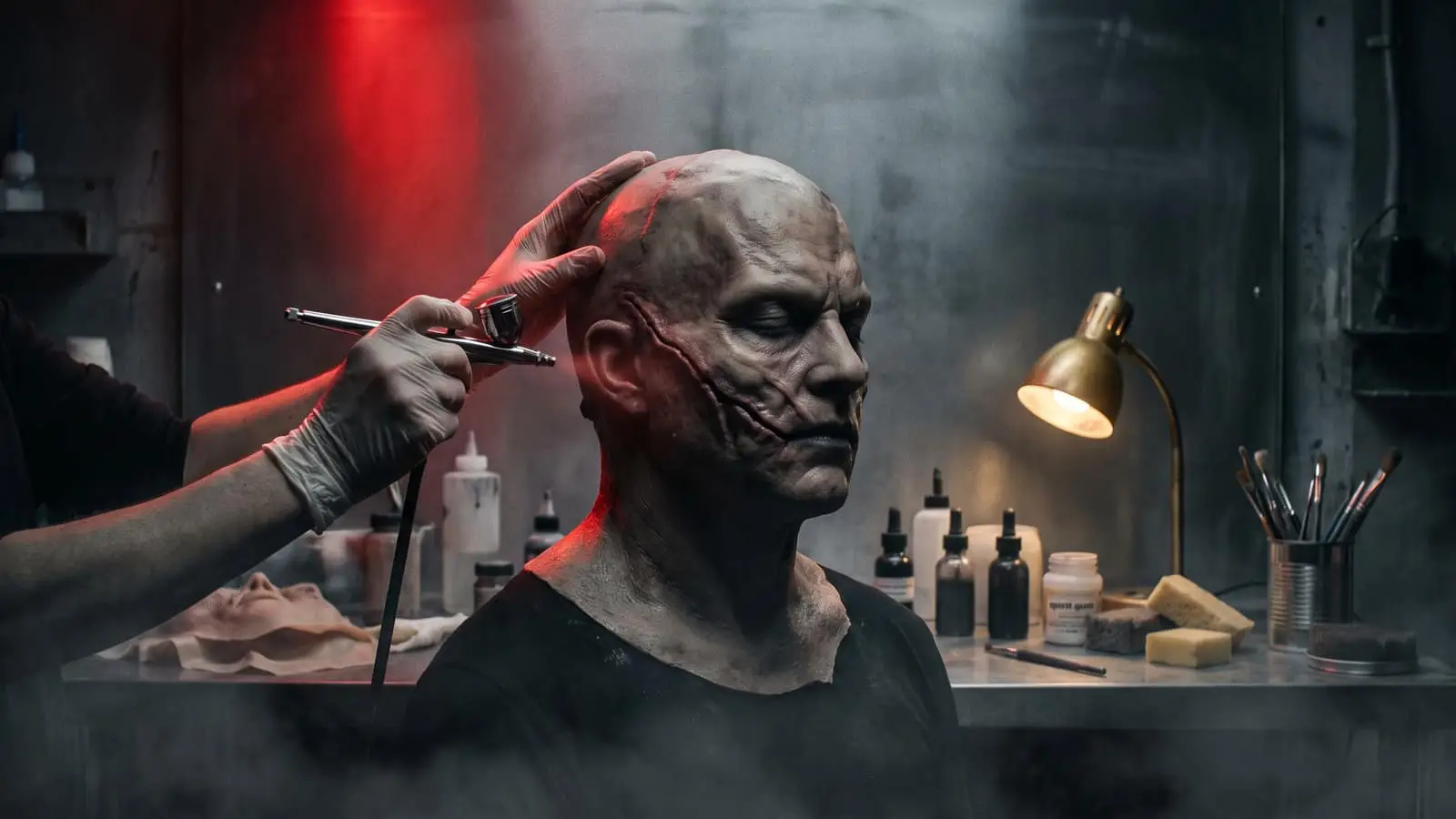
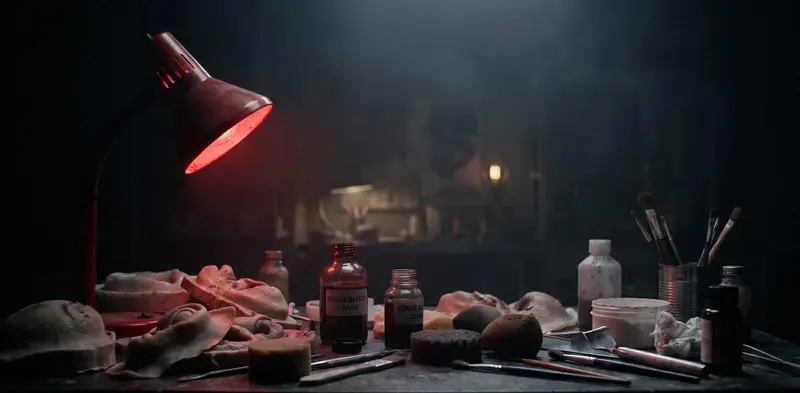
A night here does not start at 7. It starts hours earlier, in a chair, under work lights, while a single SFX artist works down a list of faces one at a time. That is not a shortcut. Every monster on our set comes from the same artist, which is slower than splitting the work across a team, but it is the only way the whole cast reads as one consistent, unsettling world instead of a pile of separate costumes.
Sitting in that chair is its own kind of preparation. You watch your own face disappear under prosthetic and paint, and somewhere in that hour you stop being the person who drove in and start being the thing that is about to stand in the dark. Some of the cast talk through the whole application. Others go quiet the moment the base coat goes on. Either way, by the time the chair spins back around, the transformation has already started doing half the acting for you.
What a Full Night Actually Demands
Once the gate opens, the night stops being about preparation and starts being about endurance. Our sets are outdoors, so a shift means hours on your feet on gravel and dirt, through whatever temperature Arizona decides to run that week, holding a scare that has to look identical for the first group of the night and the last. Nobody warns you how much a haunt asks of your legs and your voice before they ever ask anything of your nerve.
The physical shape of it is closer to sports than to theater. You are still for long stretches, sometimes minutes at a time, then explosive for one or two seconds, then still again. That rhythm repeats for the length of the show, and the performers who make it through a full season learn to ration their energy the way a runner paces a long race instead of sprinting the first mile. Becoming a scare actor starts with wanting to do it. Staying one takes learning that pacing on the job.
Staying the Monster Between Scares
The part guests never see is everything that happens between the scares, and it is the hardest part of the job. You anchor the role to a few fixed choices, a posture, a sound, a way of moving, and you come back to them no matter what happens in front of you. A group laughs instead of screaming. Someone’s phone light gives you away for a second. A kid asks you a question you were not expecting. The character has to survive all of it and still be waiting, fully formed, for the group that comes through thirty seconds later.
That discipline is why nights here can feel less like acting a script and more like live improvisation against a stranger who has no idea they are your scene partner. Nobody gives you the same reaction twice, so nobody gets the same performance twice either. The version of the character that shows up depends entirely on what the crowd hands you, and reading that in real time, under a mask, in the dark, is a skill that only builds with reps.
The Reaction Is the Whole Point
Everything above exists to produce one thing: a real, involuntary reaction from a real stranger. That is what makes the job addictive in a way most seasonal work is not. You feel a scream land through your own chest before you hear it. You watch a group grab each other’s arms and you know, for that half second, you own the moment completely. Then you reset and do it again for the next group in line, because the whole night is built out of that same half second repeated for hours.
The scale of it is not small. Our cast works a post-apocalyptic set built like a movie you walk into, not a haunted garage, and the intensity is the point. That intensity is also why the show is not for younger kids, but for the cast, it is exactly the size of production that makes the reactions worth chasing shift after shift.
The Team Behind the Mask
None of this happens alone. A haunt this size runs on the Scream Team as much as it runs on any single monster, and the cast will tell you the friendships built backstage are as much a reason to come back as the scares themselves. Between groups, in the gaps where the character can breathe for a second, that is where the real camaraderie lives: the shared joke about the guest who screamed loudest, the crew member who always has water ready at the right moment, the actor two positions down who checks in without breaking character.
That crew side matters as much as the cast side. Someone has to move the line, keep the set standing through a full run of nights, and hold the gate together while the monsters do their work. It is a full production, built and staffed from the ground up every season, and the people who choose the crew role are as much a part of the show as the ones in makeup.
Why We Come Back Every Season
Ask around the cast why they return year after year and the answers land in the same place: the reactions, the team, and the strange pride of doing something most people would never sign up for. That commitment shows up in the results too. In 2024, The Scare Factor named our cast the Highest Rated Cast in the Southwest, scoring the performers 9.0 out of 10 inside an overall review of 8.35. Scores like that do not come from one great night. They come from a room full of people who show up and hold the line, night after night, for a full season.
Ready to Be the Reason Someone Screams
If reading this made you picture yourself in that chair, the season is filling now, and shifts are going fast in the run-up to opening night. We hire a seasonal Scream Team every October, cast and crew both, and no prior experience is required. What matters is the nerve to try it and the willingness to come back for the next shift. If you want in before the current season closes out its openings, that is where you start.
And if you would rather feel it from the other side first, come find out what the cast is actually working toward. Get your tickets and walk the show yourself before you decide whether you want to be the one standing in the dark next season.
Frequently Asked Questions
Do you need experience to work at a haunted house?
No. Most of the cast started with none. What matters going in is energy, commitment, and the willingness to hold a role in front of strangers. The timing, the movement, and the stamina come from working real nights on the set, not from a resume line.
Is it scary being the one doing the scaring?
It is its own kind of nerve-wracking, just pointed the other direction. You are reading a stranger in the dark, timing a moment you cannot take back, and doing it again for the next group thirty seconds later. The adrenaline runs both ways through that mask.
How late do haunted house shifts run?
The gate opens at 7 each night, and a shift runs the full length of the show plus setup and teardown on either side. That means hours on an outdoor set in whatever the Arizona night throws at you, which is exactly why stamina matters as much as acting.
What is the hardest part of working at a haunted house?
Not the scare itself. The scare is a second. The hard part is everything around it: staying still through a long lull, resetting your energy after a group that did not react, and being just as sharp for the last car in the lot as you were for the first.
Do haunted houses hire crew as well as actors?
Yes. A cast this size only works because a crew moves guests through the line, keeps the set standing, and runs the gate behind the scenes. If performing is not the draw, there is still a seat on the Scream Team for anyone who wants a season on the other side of the mask.
Keep Reading
Related Articles
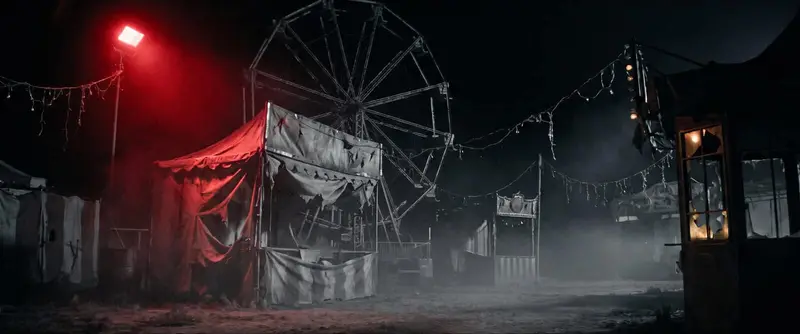
Designing a Post-Apocalyptic World: Inside Scarizona's Gravel-Lot Set
Scarizona's post-apocalyptic haunted house sits on an open-air gravel lot in Mesa: the design logic behind the sightlines, the midway, and the ground underfoot.
Arizona's Highest-Rated Cast: Inside Scarizona's Award-Winning Scare Actors
Scarizona's cast won the 2024 Highest Rated Cast Award from The Scare Factor. Here's what the score actually measures, and who earns it every October.
One Artist, Every Monster: Inside Scarizona's Single-Artist SFX Process
Meet the solo SFX artist behind a Mesa, AZ haunted house: how one hand designs and builds every monster across three haunts for one cinematic look.